By Intercoastal Crawlspace. Published .
What a vapor barrier does
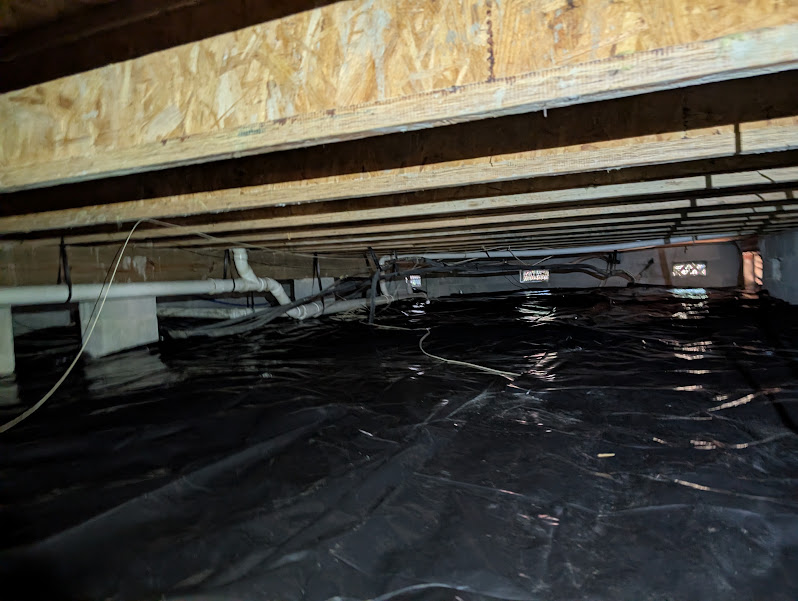
A vapor barrier is a ground cover. Polyethylene sheeting is laid across the soil, overlapped, and sealed at the seams so ground moisture cannot evaporate into the crawlspace and soak into the framing.
The vents stay open and the walls stay uncovered. For many Charleston homes with a dirt floor and no standing water, a properly installed barrier is the whole fix.
See our vapor barrier installation process.
What encapsulation does
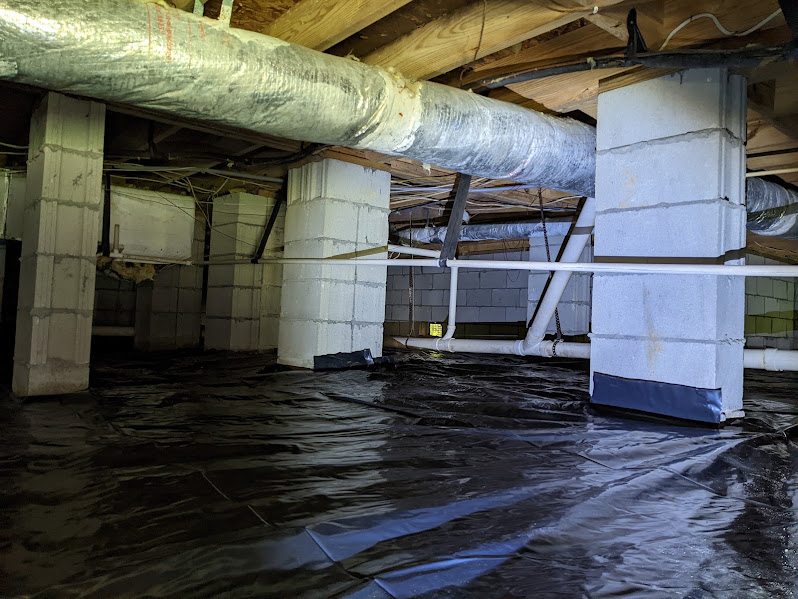
Encapsulation seals the whole crawlspace. The ground cover runs up the foundation walls and piers, the vents are closed, and the air inside is controlled, usually with a dehumidifier.
It is a bigger job because it turns the crawlspace into a conditioned space. That matters when outside air is the problem, not just the ground.
Learn more about crawlspace encapsulation.
Side by side
The main differences come down to scope.
- Coverage: a vapor barrier covers the ground. Encapsulation covers the ground, walls, and piers.
- Vents: open with a vapor barrier. Sealed with encapsulation.
- Air control: none with a vapor barrier. A dehumidifier is usually part of encapsulation.
- Best fit: a vapor barrier for ground moisture. Encapsulation for humidity that stays high after the ground is covered.
How readings decide it
Start with the readings. If wood moisture is high because bare soil or torn plastic is letting ground moisture up, a sealed barrier usually brings it back to 19 percent and under.
If readings stay in the excessive range through the summer after the ground is covered, humid outdoor air is the remaining source. That is when encapsulation and a dehumidifier earn their cost.
Not sure how to read the numbers? Here is what crawlspace moisture readings mean.
What to ask before you sign
Any quote for either job should name the material and thickness, the square footage, how seams and edges are sealed, and include labeled photos of current conditions. If a contractor recommends encapsulation, ask which readings support it.
We take readings and photos first. Book a free crawlspace inspection.