
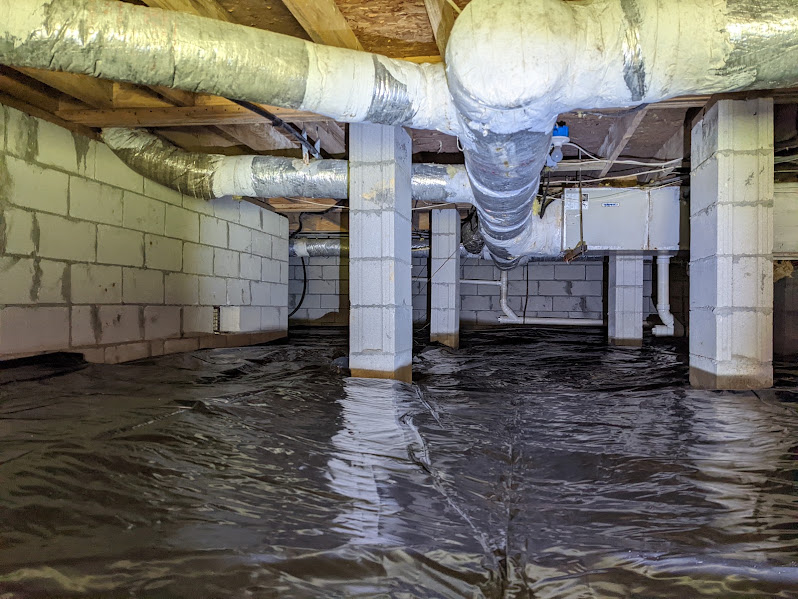
By Intercoastal Crawlspace. Published .
What a moisture reading measures
A moisture meter measures the water content of wood as a percentage of its dry weight. Under a house, readings are taken on the joists, sills, and subfloor, where trapped moisture causes the most damage.
One reading tells you little. A useful inspection takes readings in several spots, including near exterior walls, plumbing, and low corners, and records where each one was taken.
The three moisture ranges
These are the ranges we work from, and the ones inspection reports use when they flag a crawlspace.
- 19 percent and under: fungi is inactive. The wood is in a healthy range.
- 20 to 27 percent: excessive moisture conditions. This range gets flagged on inspection reports and needs correcting.
- 28 percent and higher: fungi is active. Mold, mildew, and wood decay can grow at this level.
Why readings change with the seasons
Charleston summers push humid air into vented crawlspaces, and that moisture soaks into the wood. A crawlspace can read in the active range in August and in the safe range for six to eight months of the year.
That is why one winter reading does not clear a crawlspace. If you are comparing two reports from different months, expect different numbers.
What causes high readings under Lowcountry homes
The usual causes are easy to see once you are under the house.
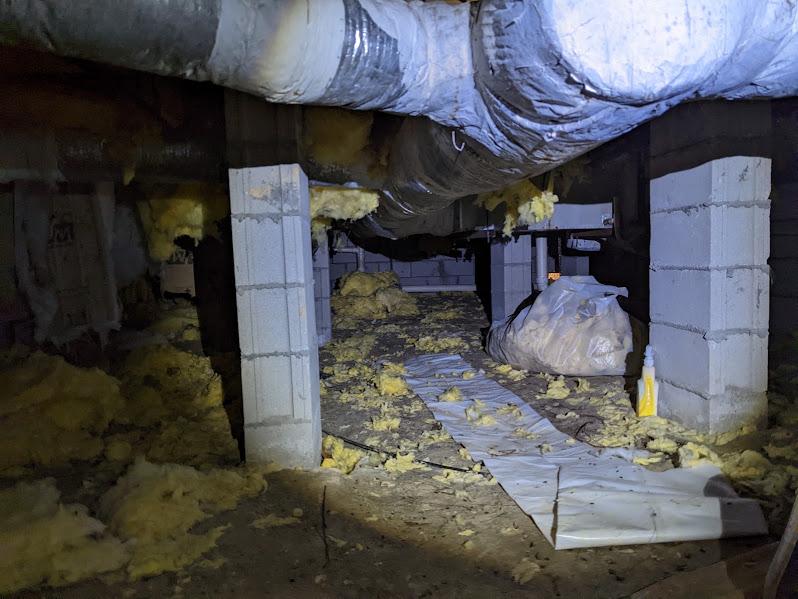
- Bare soil or torn, unsealed plastic letting ground moisture evaporate upward
- Wet insulation hanging against the subfloor
- Standing water from poor drainage or plumbing leaks
- Vents pulling humid outdoor air in through the summer
The most common fix is a properly sealed ground cover. See our vapor barrier installation.
What to do about a high reading
Start by finding the source. Clear out wet insulation and debris, stop ground moisture with a sealed vapor barrier, and fix drainage. If readings stay high through the summer after that, encapsulation and a properly sized dehumidifier are the next steps.
Ask any contractor for the actual numbers and where they were taken, before and after the work. Readings are the only honest way to know the fix worked.
When ground cover alone is not enough, read about crawlspace dehumidifier sizing.