
For South Carolina closings
CL-100 & Home Inspection Repairs
- Licensed & Insured
- Photo-Documented Work
- Honest Recommendations Only
- Serving the Lowcountry
Findings decoder
What your report is telling you
Findings can come from a CL-100 or from a general home inspection report. We work from either document. A CL-100 is not pass or fail. It is a set of yes/no findings. Here is what the ones we handle mean.
Excessive moisture conditions
Wood moisture readings from 20 to 27 percent, or standing water in the crawlspace. This is the band inspection reports flag.
Correction: identify the source, install or replace the vapor barrier, correct drainage, and add dehumidification where it is needed.
Wood-destroying fungi, inactive
Fungi is present and wood moisture is 19 percent and under, so it is inactive. It stays inactive only if the moisture stays down.
Correction: eliminate the moisture source so the finding does not return on the next report.
Wood-destroying fungi, active
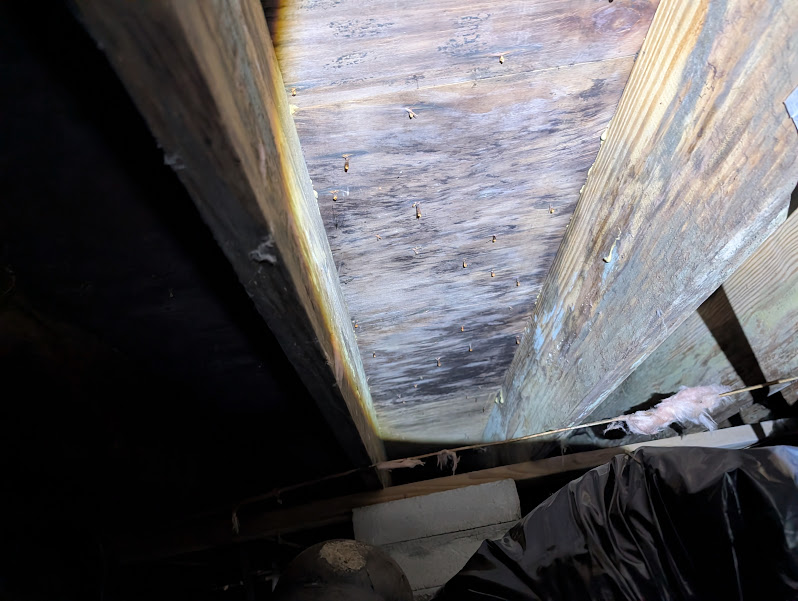
Wood moisture has reached 28 percent or higher and fungi is active. This is where mold and mildew grow.
Correction: we correct the moisture conditions driving it. Any chemical treatment of the wood itself is pesticide application and is performed by a licensed pest control operator.
Visible damage to wood members
The form itself recommends that corrections be evaluated and performed by a licensed contractor.
Correction: we coordinate directly with a licensed contractor, share our moisture findings and photos with them, and sequence our work around theirs so the closing timeline stays intact.
We inspect and we correct. Chemical treatment of wood or soil is pesticide application and is performed by a licensed pest control applicator. Need the report itself? See our CL-100 inspections.
Beyond the CL-100
Home inspection findings we repair
General home inspectors flag the same crawlspace conditions, usually in plainer language. These are the items we correct and document.
Damp soil and missing or failed vapor barriers
Bare or barely covered soil under the house feeds moisture into the framing all year. Inspectors note it because it is the source of most other crawlspace findings. We prep the ground, lay and seal the barrier, and take readings before and after.
Standing water in the crawlspace
Water that sits after rain means it is entering faster than it leaves. We find the entry point, clear the space, and correct drainage so the ground can dry.
Fungal staining on joists and subfloor
Dark staining on the wood is a moisture record, not a cosmetic issue. We take readings at the stained areas, photograph them, and correct the conditions that put the water there.
Damaged or fallen insulation
Wet and hanging batts hold moisture against the subfloor and block the view of the wood. We remove and dispose of the failed material, then replace it once the space is dry.
Elevated moisture readings
A report that lists high readings without a cause leaves you guessing. We measure the same areas, find the source, and correct it, then document the new numbers.
19% and under
Fungi is inactive.
20 to 27%
Excessive moisture conditions, the range flagged on inspection reports.
28% and higher
Active fungi. This is where mold and mildew grow.
Readings move with the seasons. A Lowcountry crawlspace can read active in summer humidity and inactive for six to eight months of the year, so a single winter reading does not clear a home for August. Correcting the moisture source is what holds the reading down year round.
The standard fix
The correction South Carolina's standard prescribes
South Carolina's regulation on wood-destroying organisms describes how excessive crawlspace moisture is normally corrected: a polyethylene vapor barrier installed over the crawlspace soil, added foundation ventilation where needed, and drainage or a sump system where water keeps entering. That is our core work. We are not improvising a fix. We are performing the correction the standard describes, and documenting it.
Process
How the closing loop works
- 01
Send us the report and your closing date
We read the findings before we come out, so the visit is focused on what the report actually lists.
- 02
We quote the correction scope from the actual findings
Line for line, nothing padded on. If an item does not need work, we say so instead of billing for it.
- 03
We complete the corrections and document them
Before-and-after moisture readings plus labeled photos of every area we touched, delivered in a form you can drop into the closing file.
- 04
The corrections are re-inspected and the updated report is issued
We perform CL-100 inspections and whole-home termite inspections as well, so we can handle that step. If another company issued your original report, they usually re-inspect, and our documentation keeps that visit short. When we performed your CL-100, re-inspection is one call, one company.
CL-100 inspectionsTermite inspections
We perform CL-100 inspections and whole-home termite inspections as well. Chemical treatment of wood or soil stays with a licensed pest control applicator.
Repair quote
Get a correction quote
Five fields is all we need to start. We will call you back with next steps and a time we can be on site.
Have the report handy. CL-100 or home inspection report, either works. Mention it and we will request a copy by email so the quote matches the findings line for line.
Prefer to talk it through? Call (843) 408-3877
Questions
Frequently asked questions
It means one or more findings were checked on the report. The lender pauses at that point until the conditions are corrected and the corrections are documented. It is not a verdict on the house. Most older Lowcountry homes come back with some finding, and a documented correction gets the file moving again.
It is negotiated between the parties and written into the contract or the repair addendum. In many Charleston-area transactions the seller pays, but buyers sometimes take a credit and handle the work after closing. We quote fast so the negotiation happens with real numbers instead of guesses.
Yes. We perform official CL-100 inspections, so we can inspect, correct the moisture conditions, and issue a report. If another company wrote your original report, they normally re-inspect, and the before-and-after readings and labeled photos we hand over make that visit quick.
Inactive means the wood moisture is 19 percent and under right now. The fungi is still there. Readings are seasonal, so a space that reads inactive in January can read active in August. Correcting the moisture source is the durable answer.
No. Chemical treatment of wood or soil is pesticide application and is performed by a licensed pest control applicator. We correct the moisture conditions driving the finding and coordinate cleanly with whoever handles treatment.
Closing soon with findings on the report? Call (843) 408-3877.
Send us the CL-100 report and the closing date. We will quote the correction scope and tell you honestly whether we can hit your timeline.
(843) 408-3877