
Summerville, SC
Crawlspace Services in Summerville, SC
- Licensed & Insured
- Photo-Documented Work
- Honest Recommendations Only
- Serving the Lowcountry
What we do in Summerville
Crawlspace Cleanouts
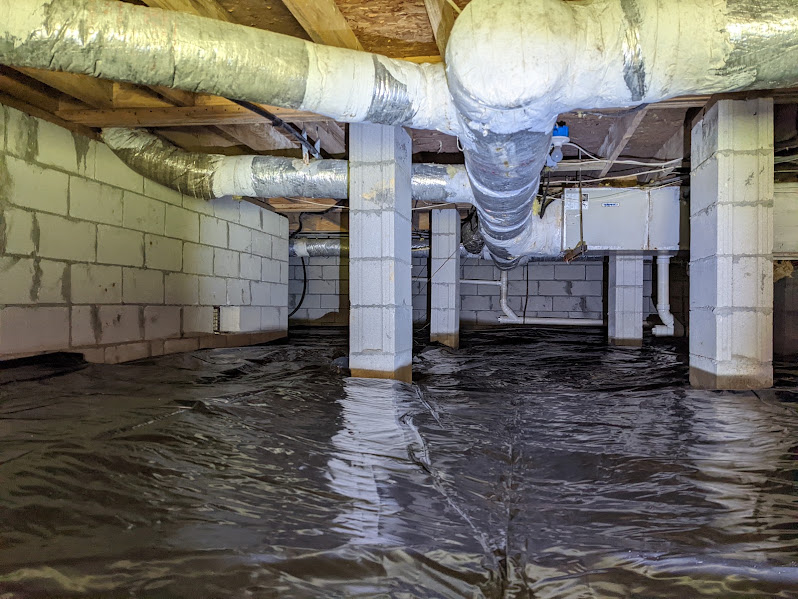
Tract-built crawlspaces collect construction scrap, buried block, and shredded builder plastic. We clear the ground so a barrier can lie flat and seal.
Learn moreVapor Barrier Installation
Clay holds water long after the rain moves on, and it keeps feeding the space. A sealed barrier over prepped ground is the single most useful repair on most Summerville homes.
Learn moreCrawlspace Encapsulation
Worth it on homes where grading and drainage cannot be corrected and readings stay high. We will tell you when your house is not one of them.
Learn moreInsulation Removal
Twenty-year-old batts in vented subdivision crawlspaces sag, soak, and fall. We remove and dispose of them, then look hard at the subfloor they were pressed against.
Learn moreCrawl Space Dehumidifiers
Inland heat plus a sealed space can still sit above sixty percent. We size the unit to the footprint and run condensate somewhere it will not pool under the house.
Learn moreCL-100 Repairs
Commuter families buy and sell here constantly. When a report flags moisture or a failed barrier, we perform the CL-100 moisture corrections and document the result for re-inspection.
Learn moreLocal conditions
Why Summerville crawlspaces need attention
Soil drives the problem out here. Much of the Summerville area sits on heavy clay that sheds water slowly, so a summer storm leaves the ground saturated for days. Under a vented crawlspace, that wet ground is an evaporation source running around the clock, and the framing above it never gets a dry stretch long enough to recover.
Then there is the build era. The growth from the 1990s through the 2010s, and the newer push along the Nexton and Cane Bay corridor, filled this market with vented crawlspaces finished to a schedule. Ground cover was often laid loose rather than overlapped and sealed, piers went unwrapped, and fiberglass batts were stapled up in spaces that would spend every August above sixty percent relative humidity. A decade on, those batts sag and the seams have drifted apart.
Summerville households also move often. A lot of buyers here commute toward Charleston or the plants along the corridor, and homes trade hands on tight timelines. When a CL-100 report flags a failed barrier or high readings, the CL-100 moisture corrections have to be right and documented, not just fast. That is the work we do.
Frequently Asked Questions
Distance from the water does not lower summer humidity much in the Lowcountry, and Summerville trades salt air for clay. Clay soil drains slowly, so water that sheets off a roof or a driveway sits in the ground around and under the foundation for days. That saturated ground evaporates straight into a vented crawlspace. Inland homes often read just as high as harbor homes, sometimes higher after a wet week.
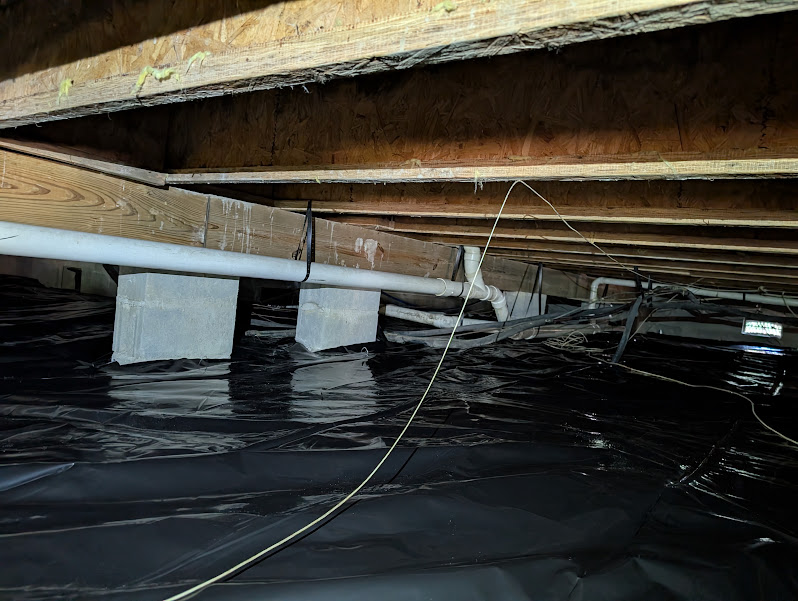
No. Age is not the issue on those homes, installation is. A large share of 1990s through 2010s tract construction in the Summerville corridor went in with vented crawlspaces and a thin ground cover that was rolled out, not overlapped or sealed at the piers. It looks fine from the access door. Ten or fifteen years later the seams have shifted, the batts are sagging, and the humidity numbers tell the real story.
It matters here more than almost anywhere we work. On clay lots, downspouts dumping at the foundation and grading that slopes toward the house will keep pushing water back under it no matter how good the barrier is. During the inspection we note what we see outside as well as under the floor. Some of that work is ours and some belongs to a grading or gutter crew, and we will tell you plainly which is which.
Serving Summerville, Nexton, and the Cane Bay corridor.
We inspect, take readings, photograph everything, and quote only the work those readings support.