Inspections
Whole-Home Termite Inspections in Charleston, SC
- Licensed & Insured
- Photo-Documented Work
- Honest Recommendations Only
- Serving the Lowcountry
What the inspection covers
Active termite activity
Live workers, mud tubes on piers and foundation walls, swarmer wings, and shelter tubes running up framing members.
Previous infestation and treatment evidence
Old tubing, drill holes, treated soil lines, and bait station remnants that tell us the home has a history worth noting.
Visible damage to wood members
Sills, band joists, floor joists, subfloor, and accessible trim, checked and probed where damage is suspected.
Wood-destroying fungi
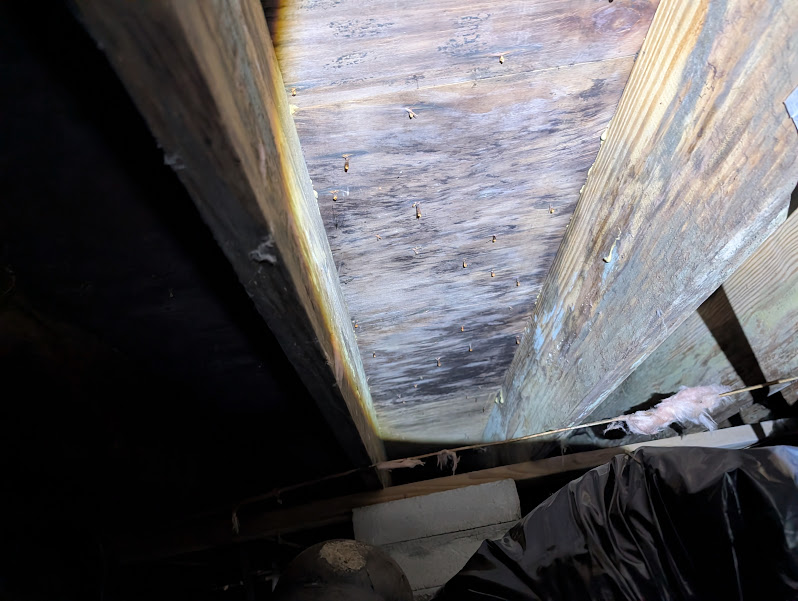
Surface growth and staining on joists and subfloor, recorded with the moisture reading taken at the same spot.
Moisture readings
Wood moisture content taken at the areas that matter, against the same bands inspection reports use: 19 percent and under inactive, 20 to 27 percent excessive moisture, 28 percent and higher active fungi.
Conducive conditions around the home
Wood to soil contact, grade and drainage against the foundation, debris under the house, blocked vents, and downspouts dumping at the wall.
30-60 labeled photos shared with you
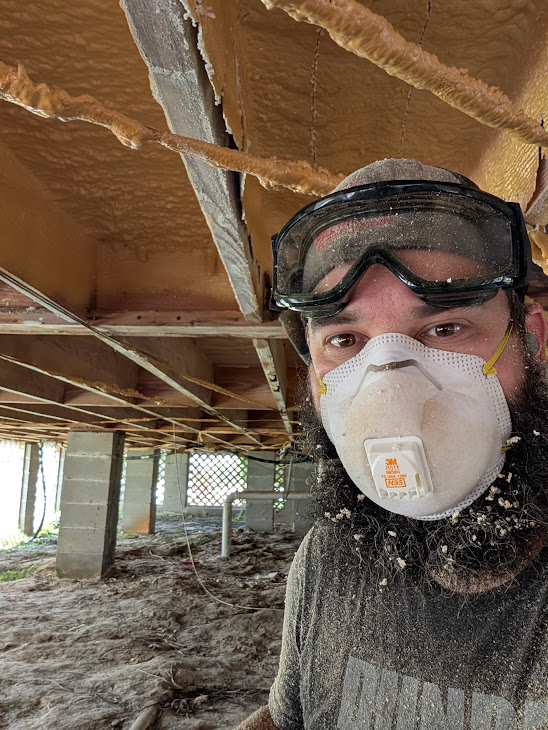
Every finding is photographed and labeled so you can see what we saw without crawling under the house yourself.
Written report walkthrough
We go through the report with you, point by point, and answer what it means for the home in plain language.
Why termite pressure is constant in the Lowcountry
Charleston sits in one of the heaviest termite pressure zones in the country. Eastern subterranean termites are present across the Lowcountry, and Formosan subterranean termites are established in and around the peninsula, Mount Pleasant, and West Ashley. Formosan colonies are far larger than native colonies and can cause visible damage faster.
Winters here rarely stay cold long enough to slow a colony down. Activity runs close to year round, and swarm season usually starts in spring and continues through the warm months. That is why an inspection is a maintenance item here, not a one time closing task.
The attractant is almost always moisture. Damp soil under a crawlspace home, a failed or missing vapor barrier, water standing after rain, and wet insulation held against the subfloor create exactly the conditions termites and wood-destroying fungi want. When we inspect, we read the moisture with a meter so the report shows the condition, not just the insect evidence.
How a termite inspection goes
- 01
Schedule around your timeline
Tell us the address and whether the inspection is for a closing or for peace of mind. Closings get scheduled against the date on the contract.
- 02
We inspect the accessible areas
Crawlspace, foundation, accessible framing, and the exterior perimeter. We take moisture readings and photograph as we go.
- 03
You get the report and the photos
30 to 60 labeled photos tied to the findings, plus the written report. Nothing is described without a picture behind it.
- 04
We walk you through what it means
What is active, what is old, what needs correction now, and what only needs watching. If nothing needs work, we say so.
Frequently Asked Questions
Once a year is the sensible interval here. Mild winters mean termite activity runs close to year round, and moisture readings move with the seasons, so a crawlspace can read active in August and inactive in February.
A termite inspection is for the homeowner: we inspect the home, document what we find, and tell you what it means. A CL-100 is South Carolina's Official Wood Infestation Report, the standardized form commonly required at closing. We perform both.
Every finding and the context around it: activity and tubing, damaged wood members, fungal staining, moisture meter readings at the spot they were taken, and the conducive conditions around the foundation. Labeled so you can match each photo to the report.
We do this work every week across the Lowcountry, including termite inspections in Charleston, termite inspections on James Island, and termite inspections in Goose Creek.
Related work
CL-100 Inspections
South Carolina's Official Wood Infestation Report, issued on your closing timeline.
CL-100 & Home Inspection Repairs
We correct the moisture findings a report flags and document them for re-inspection.
Vapor Barrier Installation
Stop ground moisture at the source, which is what draws termites and fungi in.
Not sure which of these your home needs? Compare every option on our Charleston crawlspace services page, or read how we handle CL-100 moisture corrections before a closing.
Want to know what is actually going on under your house?
Book a termite inspection and get 30 to 60 labeled photos with the report, so nothing is left to your imagination.